Lost money to a Telegram task scam? Learn how to recover funds via 1930, avoid “Digital Arrest” traps, and protect your Aadhaar/PAN from identity theft.

Telegram Task Scam Recovery: A 2026 Guide to Getting Your Money Back

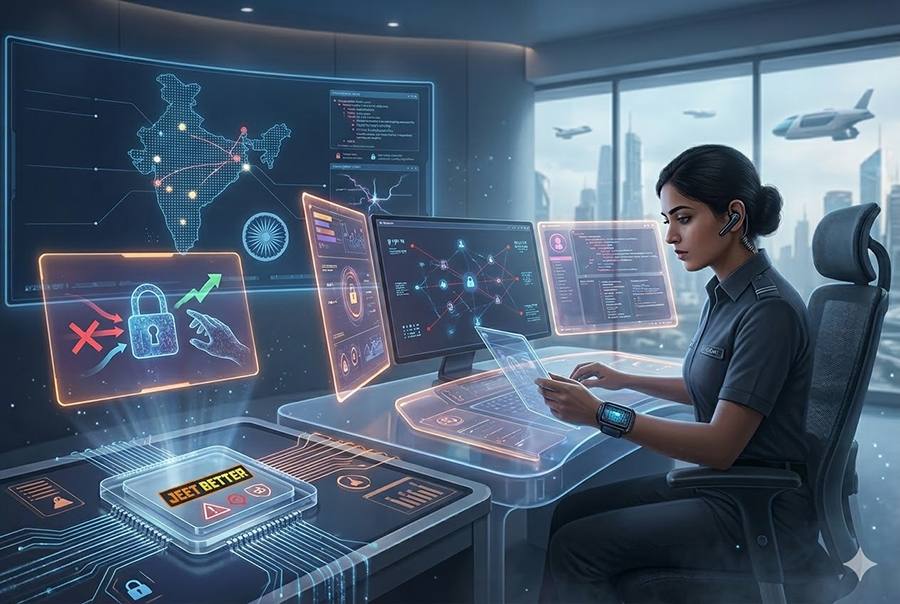
Opening Summary
The “Telegram Task Scam” has evolved into India’s most prolific financial threat in 2026. These schemes lure victims with simple “YouTube Like” or “Google Review” tasks before trapping them in high-stakes “prepaid” investment frauds. This guide is designed for victims looking to recover lost funds through official channels like the 1930 helpline and for those seeking to shield their digital identity from further misuse. Whether you are facing a “frozen” bank account or threats of “Digital Arrest,” this analytical breakdown provides the specific steps required to navigate the Indian cyber-legal landscape.
The 2026 Landscape: Why Telegram Task Scams Are Exploding
In my years of analyzing digital fraud, I’ve seen many trends, but the 2026 surge in Telegram-based “Work from Home” scams is uniquely dangerous. The Ministry of Home Affairs has specifically flagged these as a primary source of financial loss for Indian citizens. The migration from WhatsApp to Telegram is the first major red flag I always tell people to watch for; scammers prefer Telegram because its anonymity makes it a perfect hub for illicit operations.
These groups don’t start by asking for money. They start by giving it to you. By paying ₹50–₹100 for a simple task, they exploit a psychological “trust-building” phase. Once you’re hooked, the shift to “prepaid tasks” begins, where you are forced to pay “security deposits” to unlock higher earnings. In 2026, these are no longer amateur operations; they use sophisticated web interfaces and “mule accounts” to funnel money across state borders.
The Anatomy of a Prepaid Task Scam
When I look at the data from recent cases, the “Prepaid Task” model follows a rigid script. First, you are added to a group where “members” (often bots or co-conspirators) post screenshots of massive earnings. This social proof nudges you to take the leap. However, the moment you try to withdraw your “earnings,” the trap shuts.
Scammers often simulate technical glitches or “frozen balances” to extract more money. They might claim you need to pay a “GST clearance fee” or a “system tax”. I cannot stress this enough: legitimate Indian companies never ask for upfront payments to release a salary. If you see a “frozen” status on a scammer’s portal, paying more will not unfreeze it; it only increases your loss.
The “Mule Account” Problem
A major complication I’ve observed is how these scams affect innocent third parties. The “rewards” you receive in the early stages are often stolen funds from other victims. When those victims report the fraud, your bank account gets flagged by the Indian banking system’s “Fraud Monitoring” AI, leading to an automatic freeze. This is why many users on r/IndiaTech report their accounts being blocked due to a “Cyber Complaint” from a different state.
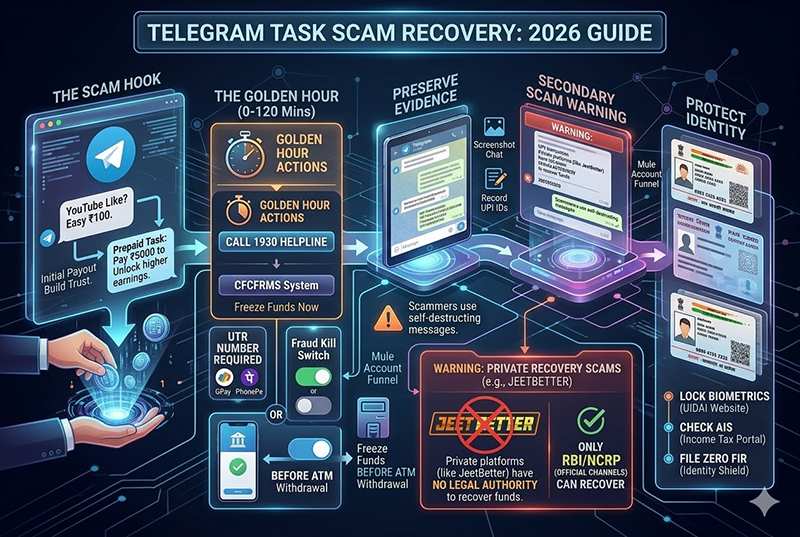
Step-by-Step Recovery: The “Golden Hour” Protocol
If you have just realized you’ve been scammed, your actions in the next 120 minutes, the “Golden Hour”, determine whether you will ever see your money again.
The 1930 Helpline and Portal
The first thing I tell any victim is to call the 1930 Cybercrime Helpline or visit cybercrime.gov.in immediately. This triggers the “CFCFRMS” system, which is the only real way to freeze money in the scammer’s account before it hits an ATM. You will need your 12-digit UTR (Unique Transaction Reference) number from PhonePe, GPay, or your banking app.
2. Preserving Evidence
Scammers in 2026 are increasingly using “Self-Destructing” messages to erase evidence. You must take screenshots of the entire Telegram chat history before the admin blocks you. When filing your FIR, include the specific UPI IDs used for the transfers.
3. Use the “Fraud Kill Switch”
Many Indian banks have now introduced a “Fraud Kill Switch” in their mobile apps. If you suspect your account is compromised or you’ve interacted with a malicious bot, use this to instantly freeze outgoing UPI transactions while keeping your incoming funds safe.
Identifying “JeetBetter” and Recovery Scams
A second wave of fraud has emerged in 2026: the “Recovery Scam”. Platforms like “JeetBetter” or individuals claiming to be “Ethical Hackers” often promise to get your money back for an upfront fee.
I have analyzed these “experts,” and the truth is simple: no private platform has the legal authority to force a refund from a scammer’s wallet. Recovery can only happen through RBI-mandated banking channels or the National Cyber Crime Reporting Portal. Always verify any recovery service on the Ministry of Corporate Affairs (MCA) portal; if they aren’t a registered law firm or government agency, they are likely a second scam.
Protecting Your Identity: Aadhaar and PAN Security
If you shared your KYC documents with a “Task Recruiter,” you aren’t just at risk of losing money, you are at risk of “Identity Fraud”. Scammers use these details to open “Mule Accounts” or take “Instant App Loans” in your name.
My Security Checklist for KYC Data:
- Lock Biometrics: Use the UIDAI website to lock your Aadhaar biometrics immediately.
- Check AIS: Monitor your Annual Information Statement (AIS) on the Income Tax portal for high-value transactions you didn’t authorize.
- Masked Aadhaar: For any future interactions, only use the “Masked Aadhaar” version to prevent deepfake “e-KYC” bypasses.
- Zero FIR: File a “Zero FIR” at your local station specifically mentioning the “Loss of KYC data” to create a legal shield against future crimes committed using your ID.
Comparison: Legitimate Tasks vs. Telegram Scams
| Feature | Legitimate Micro-tasking | Telegram Task Scam |
|---|---|---|
| Initial Payment | Never required. | Small payout to build trust. |
| Platform | Official websites/apps. | WhatsApp redirecting to Telegram. |
| Fee Structure | Performance-based earnings. | Demands “security deposits” or “taxes”. |
| Identity Request | Standard corporate KYC. | Requests KYC for “Mule Account” creation. |
| Withdrawal | Automated to linked account. | Fails due to “technical glitches”. |
| Communication | Professional email/support. | High-pressure tactics and “Digital Arrest” threats. |
Dealing with “Digital Arrest” and Legal Threats
One of the most terrifying developments I’ve seen in 2026 is the “Digital Arrest” scam. Scammers impersonate CBI or Mumbai Police officers over video calls, claiming your account was used for hawala transactions.
They use fake warrants and police station backdrops to induce “fear-induced compliance”. You must remember: real Indian law enforcement will never conduct interrogations over a video call and never ask for a “settlement fee” to clear your name. If this happens, stay calm and hang up. Report the number to the Sanchar Saathi (TAFCOP) portal immediately.
FAQ: Answered by JeetBetter Experts
Is it legal to earn money from Telegram task groups in India, or are they all fake?
While legitimate micro-tasking exists, I have found that 99% of Telegram task groups in India are “Prepaid Task Scams”. They lure you with small payments for simple tasks like liking YouTube videos to build trust. Once you are hooked, they demand “investments” to reach higher tiers. The Ministry of Home Affairs has officially flagged these as “Work from Home” frauds in 2026. Legitimate companies will never ask for “merchant fees” to pay your salary.
Why is my UPI payment failing when I try to withdraw my task earnings from a Telegram bot?
Your withdrawal is likely failing because the “balance” you see is a psychological trap, not real money. Scammers simulate technical errors to force you into paying “unfreezing charges” or “GST fees”. Additionally, since 2025, NPCI has used “Velocity Checks” and 1930 reporting data to automatically block transactions to known scammer UPI IDs. There is no such thing as a “withdrawal fee” for real earnings, so do not pay more.
How to recover money from a Telegram task scam if I paid through PhonePe or Google Pay?
Time is the most critical factor for recovery. You must report the scam on the National Cyber Crime Reporting Portal (cybercrime.gov.in) or call the 1930 Helpline within the first 2 hours (the “Golden Hour”). This allows the I4C to trigger the CFCFRMS system and freeze the funds in the scammer’s “mule account”. You will need to provide the 12-digit UTR number from your payment history as the primary tracking key.
Can the police arrest me if a Telegram scammer says I am involved in money laundering?
No, the police in India will never arrest you over a WhatsApp or Telegram video call. This is a “Digital Arrest” scam where fraudsters impersonate officials from the CBI or ED using fake backdrops and warrants. Their goal is to terrify you into paying a “settlement fee”. Real law enforcement never asks for security deposits to “clear your name”. If threatened, hang up and report the handle to the Sanchar Saathi portal.
What should I do if a Telegram group admin has my Aadhaar and PAN card details?
Sharing these documents puts you at high risk of identity fraud, where scammers open “Mule Accounts” or take loans in your name. You should immediately lock your biometrics on the UIDAI website and check your CIBIL report for unauthorized inquiries. Filing a “Zero FIR” at your local station for “Loss of KYC data” is essential to protect yourself if your documents are used in future crimes.
Why am I getting “Income Tax” notices after participating in Telegram tasks?
Most of these are “Phishing” emails from scammers designed to look official. They claim you have “unaccounted income” from your tasks and demand a penalty. However, if you received large sums during the scammer’s “trust-building” phase, your bank may have flagged your account as a “Mule Account”. Genuine government emails only end in .gov.in or .nic.in. If your account is frozen, visit your bank branch to get the “Notice Number”.
Is JeetBetter a safe platform for recovering lost money from Telegram scams?
You should be extremely cautious; in 2026, many “Recovery Scams” use names like JeetBetter to target victims a second time. No private platform has the legal power to force a refund from a scammer. Real recovery only happens through the 1930 Helpline or RBI-mandated banking channels. If a platform asks for an “upfront fee” or “software cost” to recover your money, it is a scam. Verify any firm on the MCA portal first.
Why are Telegram bots asking for my “Telegram Session String” or OTP?
This is an attempt at “Session Hijacking”. By providing a “Session String” or OTP, you give the scammer full access to your Telegram account, including private chats and contacts. They then use your identity to scam your friends and family. If you have interacted with such a bot, go to Settings > Devices and click “Terminate all other sessions” immediately. Always enable Two-Step Verification (2FA) for better security.
My bank says my account is blocked due to a “Cyber Complaint” from another state. What should I do?
This happens because the “Task Rewards” you received were likely stolen from another victim. Scammers use your account as a “layer” to clean their money, leading to an automatic freeze when the original victim reports the fraud. You must cooperate with your bank’s Nodal Officer and provide your Telegram chat history to the Investigating Officer (IO) to prove you were a victim, not a co-conspirator.
Can I get a refund if I fell for a Telegram “Crypto Task” scam?
Recovering crypto like USDT or BTC is much harder because these transactions are irreversible. While the I4C works with exchanges like Binance to blacklist fraudulent addresses, your chances of recovery are low if you used a private wallet like MetaMask. If the task required you to buy crypto via P2P, your bank account is also at high risk of being flagged for money laundering. Never use your primary bank-linked number for P2P trades.
Top – Indian Casinos

150% Welcome Bonus up to ₹40,000

Welcome bonus offering 100% up to €600/$600

350% bonus of up to ₹70,300

Get 200% Welcome Bonus up to ₹1 Lakh + ₹500 Free Bet

Get 100% up to ₹25,000 bonus on your first deposit.

200% welcome bonus on their first deposit up to ₹1,00,000




Top Rated Casinos
200% welcome bonus on their first deposit up to ₹1,00,000
Get 200% Welcome Bonus up to ₹1 Lakh + ₹500 Free Bet
Get 100% up to ₹25,000 bonus on your first deposit.
150% Welcome Bonus up to ₹40,000
Welcome bonus offering 100% up to €600/$600
350% bonus of up to ₹70,300